


The difficult path of supporting the energy transition with appropriate electricity tariffs
01/15/2025
BA Energy Solutions and H2HYDRA: An alliance to boost green hydrogen in Latin America
04/10/2025
Impact on reserve levels and their cost due to the penetration of renewable energies in the Peruvian National Electric System

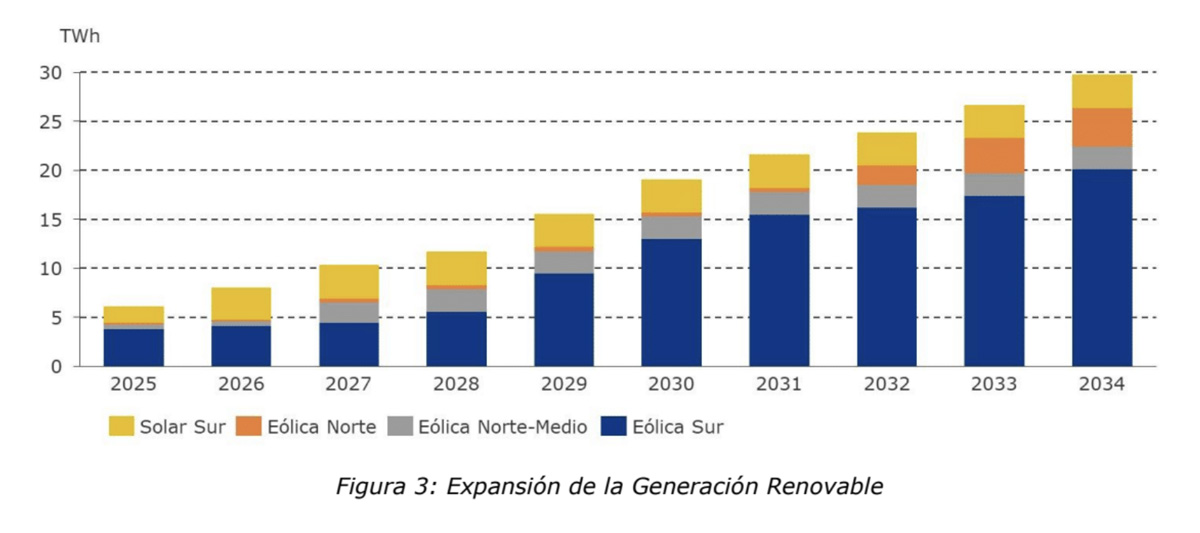
It is projected that, with the new regulations that incentivize the penetration of renewable energies, the share of these clean energy sources in Peru's electricity system will increase from 8.6% in 2024 to 33.0% by 2034. This implies the incorporation of approximately 6,700 MW of power from renewable sources, with an average annual generation of 29.7 TWh.
Currently, 40% of the secondary frequency regulation (SFR) reserve is attributable to renewable energy sources, while their reserve payment is only 8%. This led to the enactment of Law 32249 in January 2025, which amended Law 28832 (“Law to Ensure the Efficient Development of Generation”). This new law includes incentives for renewable generation participation in energy supply tenders for the regulated market and establishes the creation of an ancillary services market starting in 2026. It also stipulates that the costs of these services will be allocated in proportion to the instability caused by market participants. For the SFR service, this means that conventional generation projects will no longer contribute to the SFR service payment for variations in generation from non-dispatchable renewable sources, which will now be covered exclusively by these technologies.
Within the framework of this new Law, the dispatch operator (COES) has submitted to the regulatory body (OSINERGMIN) a proposal to modify its Technical Procedure No. 22 – Rotating Reserve for Secondary Frequency Regulation (“New PR22”), which considers the application of the new law, proposing the allocation of costs in proportion to the deviations of non-dispatchable renewable generation and demand.
The new PR22 also includes modifications that would allow for a reduction in the required RSF levels and also the cost of this.
Among the changes that would make it possible to reduce RSF levels, the following stand out:
- Monthly update of the service requirement, which will be carried out with hourly granularity.
- Exclusion of events independent of resource availability for estimating variations in non-dispatchable renewable generation.
- Inclusion of new technologies for the provision of the service.
Among those related to reducing RSF costs are the following:
- Elimination of opportunity cost in the allocation of payments to units qualified to provide the service.
- Allocation of additional operating costs for service compliance according to PR-33 (in proportion to energy withdrawals).
- Calculation of the price limit for bids for the provision of the service (calculated by COES), based on the maximum expected marginal cost of the daily operating program multiplied by an incentive factor.
- Inclusion of new technologies for the provision of the service.
Based on an analysis conducted by our company, it can be stated that the magnitude of the RSF required with the proposed modifications would be less than currently estimated, and it is expected that the competition generated in the complementary services market will allow for cost reduction in the long term.
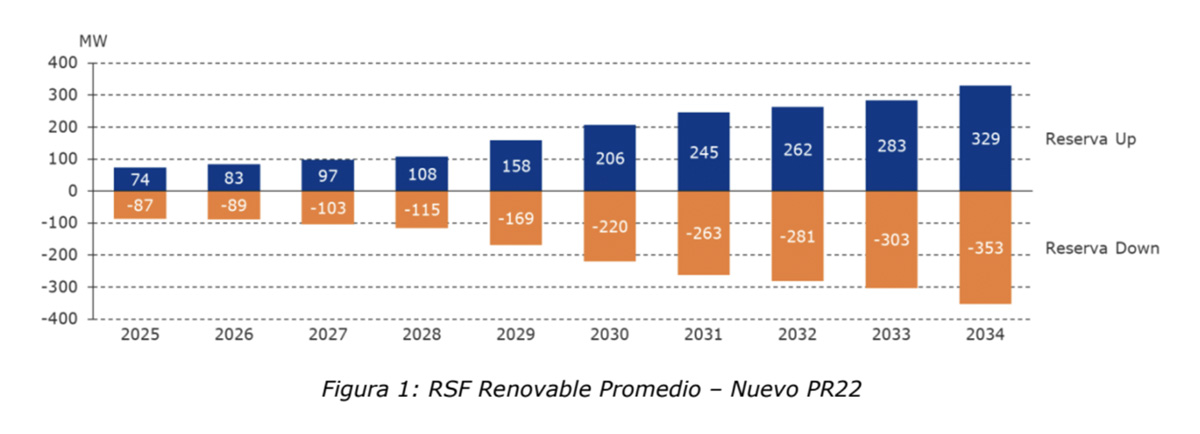
In 2025, the average RSF estimated by COES to cover the variation in renewable generation is 74MW to increase and 87MW to decrease, which represents 47% of the total reserve requirement, while with the penetration of renewable generation towards 2034 it is estimated that 329MW will be required to increase and 353MW to decrease, representing 67% of the total.
The results of the evaluation show that the reserve requirement increases in the months with less non-dispatchable renewable resource, which corresponds to the periods with greater uncertainty in generation.
The RSF requirement for variation in non-dispatchable renewable generation has been calculated considering the impact of the new PR22, estimating up to 40% on the current reserve requirements in the event of no regulatory changes:
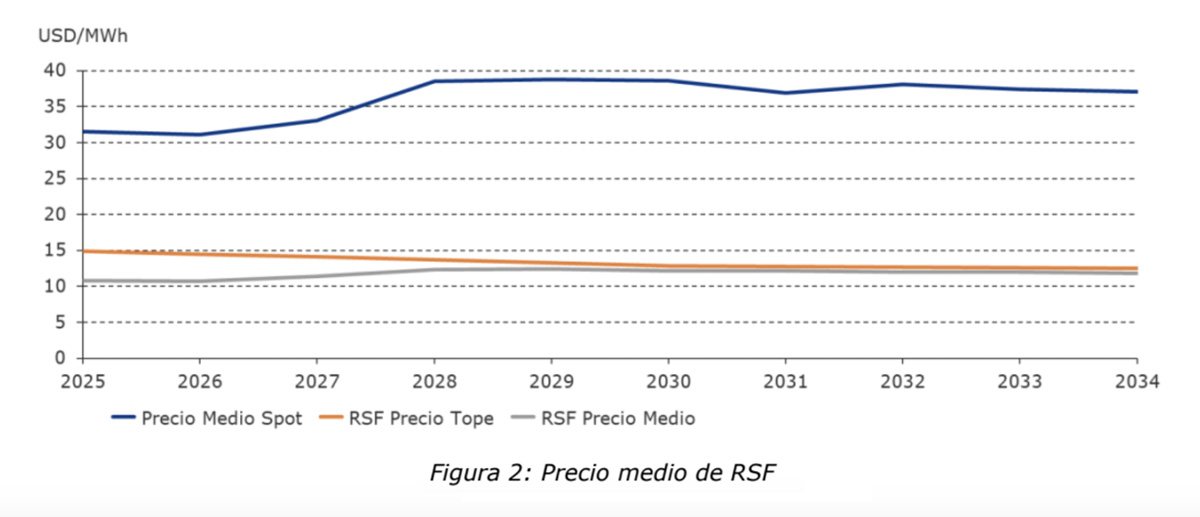
Regarding the future price of RSF, it has been considered that in a competitive environment the values of the offers should not exceed the cost of the most expensive technology for the provision of the RSF service, which would be the provision of the service with battery equipment (BESS), considering the evolution of maximum prices for 100MW modules.
The RSF price was estimated by scaling the 2024 service delivery costs with the projected spot price for the evaluation period. This approach is based on the assumption that future RSF service bids must compensate for the lost opportunity cost. The scaled price was then compared to the previously estimated maximum value to determine the RSF price.
The estimated penetration of renewable energy, the total cost of the RSF, and an estimated allocation of costs for renewable generation are shown in the following graphs:
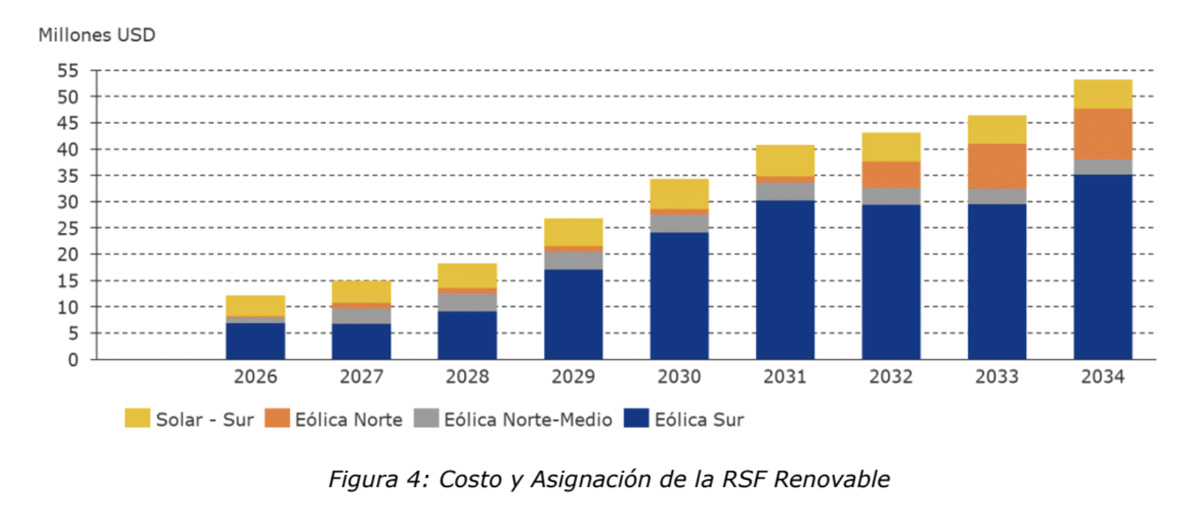
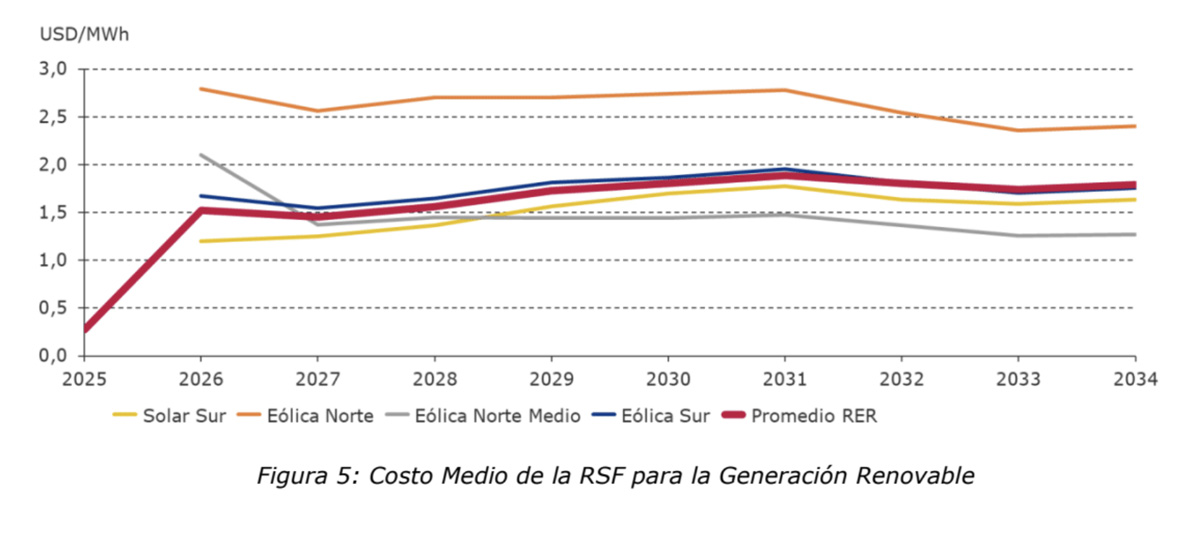
Based on the analysis carried out, even though the application of Law 32249 and the new PR22 from 2026 onwards tends to reduce reserve costs, it is estimated that the cost of RSF service for renewable generation would increase from US$0.3/MWh in 2024 to US$1.5/MWh by 2026, while for conventional generation the cost would decrease.
By 2034, the average RSF cost for renewable energy would increase to US$1.8/MWh, considering the higher cost of BESS equipment to provide the service, but with a trend towards a reduction in the long term.
An analysis by zone shows that the increase may be greater in projects in the northern zone (Piura), which have greater production volatility.
Therefore, new renewable energy projects should factor in higher ancillary service costs, while projects under development should consider updating their cost projections to reflect the new law. It is expected that, in the long term, these increased costs will be passed on to end users through higher prices in supply contracts.




Let’s start a conversation
Contact us to assess your needs and work together to identify the most suitable solution.